In America, we are now having to debate a very basic question: Do human beings have the fundamental right to exist in public spaces?
Commentary by Michael Robinson -Uvalde Hesperian
Top Image generated by Grok AI
06-05-26
Several years ago, I helped organize a Laundry Love outreach event hosted by a local church with the cooperation of a locally owned laundromat.
Laundry Love is an outreach movement I learned about in the early 2000’s. The concept is simple and pretty straight forward. A group of individuals, charitable organizations or churches would get permission from a local laundromat to set up for several hours at a local laundromat and offer to pay for customers’ laundry. Back in the day, the whole effort would run several hundred dollars.
“Volunteers would set up a sign-up table and casually ask customers if they’d be willing to have us pay for their clothes washing and drying for free. The organization would estimate a budget of how many quarters an individual or family might need and then “feed” quarters into the machines.
Our church even brought laundry detergent too and dryer sheets.
Most people, upon realizing there were no strings attached would be delighted they would be the recipient of a delightful and unexpected surprise.
Typically, after a fistful of quarters were dropped into the machines and the washing started, the interaction was over but not always.
One man in his mid-20s said he was thankful for something good and unexpected to happen to him. He told his story about him and his wife moving to Uvalde after a big job loss. He and his wife were sleeping in a tent in his parents’ backyard. There was literally nowhere else they could stay.
Economic hardship is no stranger to many who live in and around Uvalde.
According to a Wikipedia article, in the U.S. Supreme Court Decision, City of Grants Pass vs. Johnson, it held, “that local government ordinances with civil and criminal penalties for camping on public land do not constitute cruel and unusual punishment of homeless people.[1]”
“In America, we are now having to debate a very basic question: Do human beings have the fundamental right to exist in public spaces?
Some elected officials governing towns with a high percentage of poor residents say “no.”
Even in a community full of working-class families, some believe if you cannot afford traditional housing, you have no right to sleep in your vehicle or rest on public property — even if you have nowhere else to go.
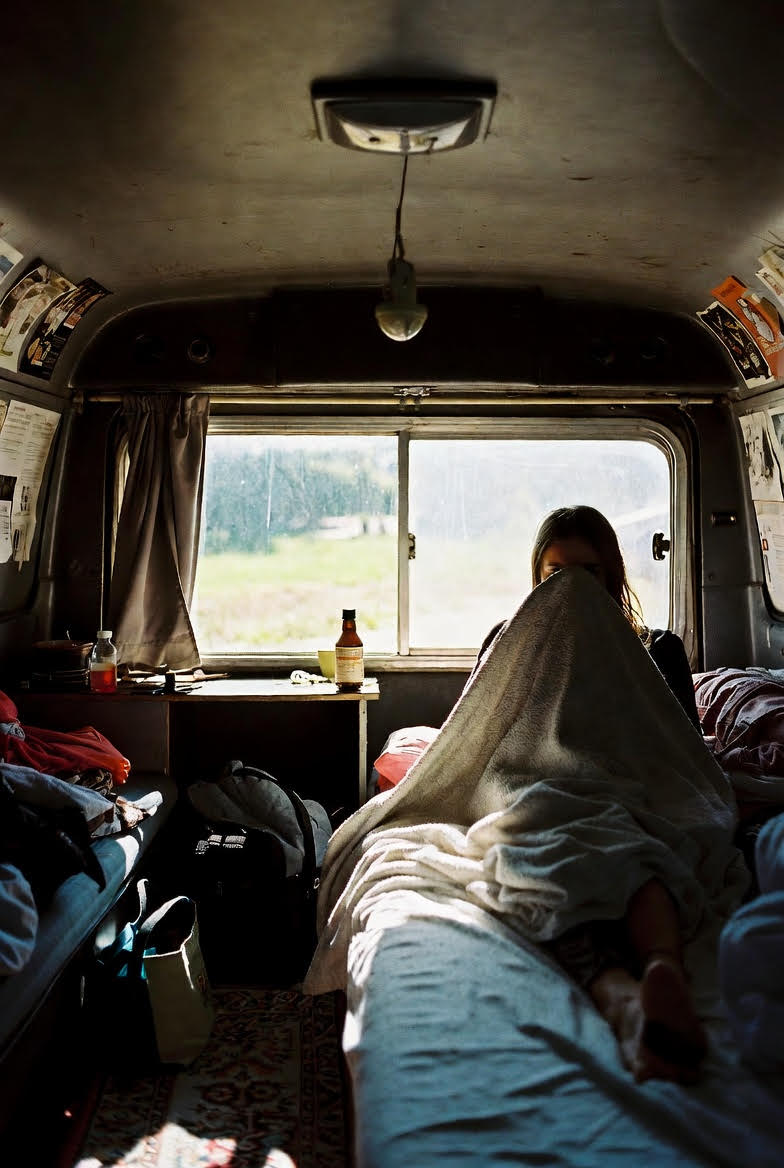
One lifestyle that grew in the early 2000s until recent years was van life or RV living. People from young adults in their 20s to the financially strapped retirees that found traditional housing unaffordable, chose to live in a vehicle out of necessity. The 2020 Academy Award winning movie: Nomadland showed the gritty realities of living in a camper or van.
Another emergent solution was the tiny-home movement. Tiny homes are like traditional homes but much smaller. Many municipalities existing zoning laws do not allow for tiny homes. Zoning laws in many American cities and towns are stuck on the 1950’s -1960’s “Leave it to Beaver” traditional single-family dwellings with a minimum total square footage requirement. These homes, sadly, have become way too expensive for more potential homebuyers than in decades past due to private equity firms buying up residential properties for investment yields.
According to a New York Times Opinion Piece titled, The ‘New Redlining Is Deciding Who Lives in Your Neighborhood, says, “Economically discriminatory zoning policies — which say that you are not welcome in a community unless you can afford a single-family home, sometimes on a large plot of land — are not part of a distant, disgraceful past. In most cities, zoning laws prohibit the construction of relatively affordable homes — duplexes, triplexes, quads and larger multifamily units — on three-quarters of residential land.”
With legal options for shelter quickly vanishing, many have chosen to live in rented storage building units. While most if not all storage rental businesses strictly banning it happens anyway and throughout the nation, it’s an all-too-common cat and mouse game between those living in storage units and the facility owners trying to catch them.
Many affluent residents have the mindset that “we can’t have that here” referring to the annoyance of seeing lines of vans and RV’s parked overnight on public parking spaces along municipal roads.
City governments can limit the amount of time a vehicle can park on a city street but making it suspicious and even illegal just to close one’s eyes while parked in a Kafka-Esque reality that should sober most people up.
Tone deafness to poverty is sadly not only common but local. During the midst of the 2022 Texas Winter Storm that left many Texans without power, one local publication framed its story as an opportunity to throw another log on the fire in the fireplace. I’m not making this up.
The choice remains: Are elected officials at all levels willing to address the hard economic realities facing poorer Americans, or will they just outlaw poverty?