
President Biden era Border Policies may have served as an indirect catalyst to the arrival of the New World Screwworm to the U.S.
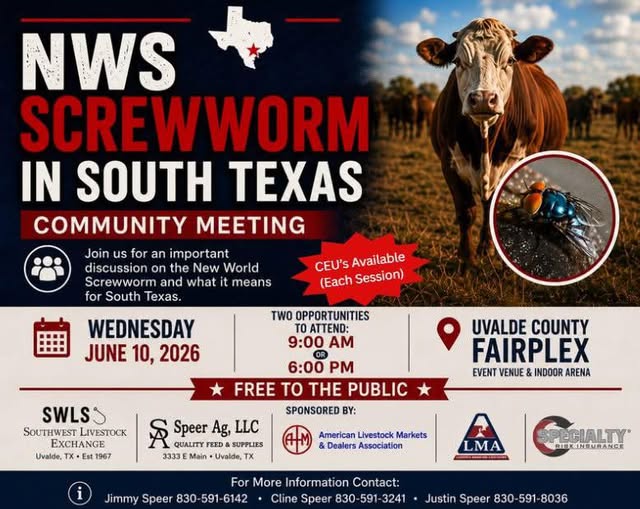
Top Picture: Grok AI generated pic based on actual events- Used for illustration purposes only
Michael Robinson | Uvalde Hesperian
06-09-26
After decades of containment of the screwworm parasite that once decimated herds of U.S. cattle, and other animals, what factors contributed to the collapse of the systems in place that prevented migration of the Blowfly and its larva into the U.S?
According to the article, New World Screwworm: Rise, Fall and Resurgence,
from the American Science of Microbiology’s website, www.asm.org, it states,
“The exact cause of this breach is unclear but is most likely due to multiple factors, including interruptions in sterile fly production due to the COVID-19 pandemic and illegal cattle imports, as well as the challenges involved in surveillance of the gap’s difficult geography.”
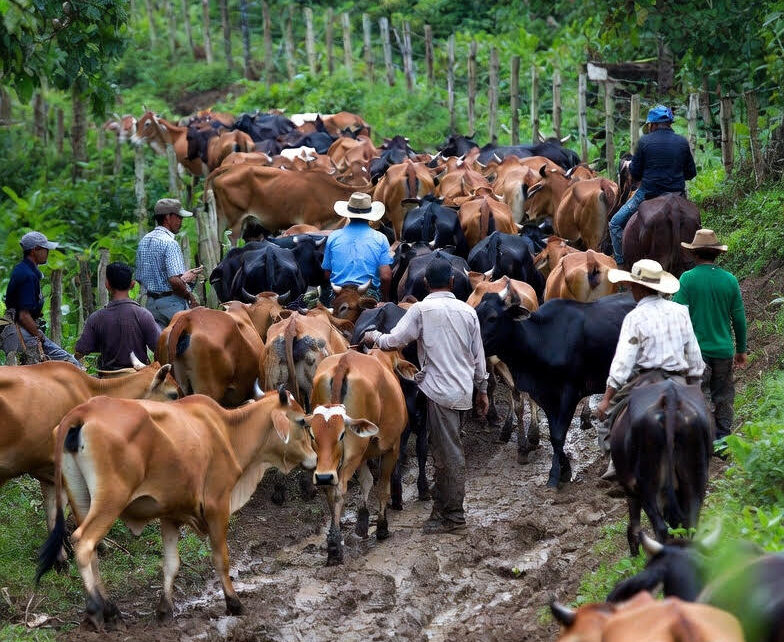
As early as November 2024, a perfect Screwworm parasite storm outbreak was already brewing due to illegal cattle trafficking between some Central American countries and Mexico according to a news report by the Wildlife Conservation Society.
“Evidence directly links illegal cattle trafficking to the screwworm’s resurgence. Major screwworm outbreak hotspots closely mirror cattle smuggling routes identified in InSight Crime’s 2022 report, “Cash Cows – The Inner Workings of Cattle Trafficking from Central America to Mexico.”
The report also said, “Illegal cattle trade in Mesoamerica, the southern border of North America extending to the Pacific coast of Central America, follows transboundary routes starting in Nicaragua and passing through Honduras and Guatemala, before infiltrating Mexico’s food supply chain and reaching as far as the U.S. This unregulated cross-border movement has created a rapid corridor for the parasite, allowing it to travel nearly 700 miles—from the Nicaragua-Honduras border to Catazajá, Mexico—in just two and a half months. ”
U.S. relaxed border policies may have served an indirect catalyst for the spread of the New Worm Screwworm through Panama as the parasite was reported to follow the same Darian Gap route trod by migrant populations traveling towards the U.S.
In the Newsweek article, How a Favored Migrant Route Became Invasive Species Superhighway to US, it said,
“The Darién Gap, long a perilous route for millions of migrants traveling north toward the United States, has also become a pathway for the northward spread of the New World screwworm—a parasitic fly now challenging decades of containment efforts.
The flesh-eating fly, whose larvae burrow into the wounds of living animals, has surged north through Central America since 2022, recently reaching the Mexican states of Oaxaca and Veracruz—roughly 700 miles from the Texas border. Scientists and federal officials now warn that the screwworm could cross into the U.S. as early as this summer if containment efforts falter.”‘
Sterile Insect eradication technique
According to the ASM.org article is states:
“The search for an alternate preventive to chemical pesticide treatments began in the late 1930s with scientists working at the U.S. Department of Agriculture (USDA) Laboratory in Menard, Texas. At that time, the screwworm was devastating livestock herds, including red meat and dairy supplies across the Southern U.S., Mexico, Central America and South America.
The article continues and states, “The first trial to eliminate NWS in the wild occurred in 1954 on the island of Curaçao, north of Venezuela. Within 4 months, the New World screwworm fly was successfully eradicated from the island. This success led to the adoption of the technique in the continental U.S., and C. hominivorax has been considered extinct there since 1966.”